 01395 239500
  info@projuice.co.uk


 £0.00
£0.00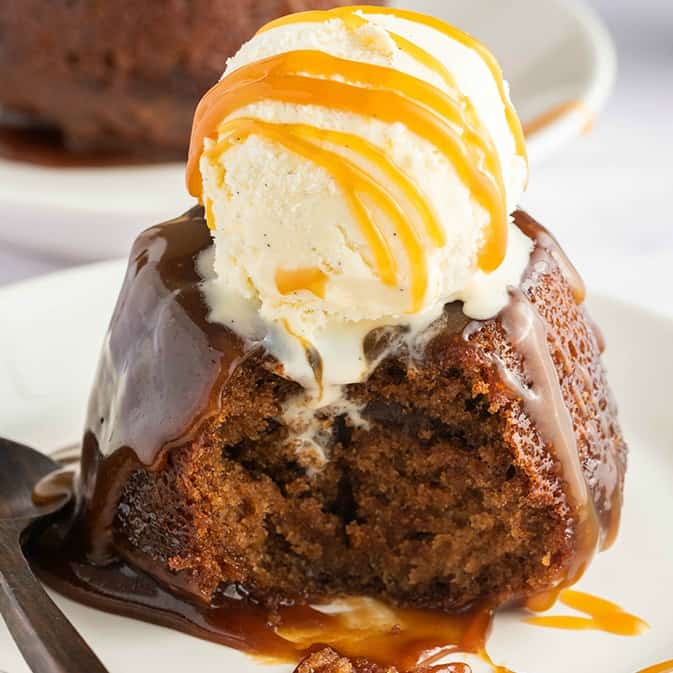
Who invented Sticky Toffee Pudding?
So, who invented sticky toffee pudding? Nobody knows for certain. Three places lay claim to it: the Gait Inn in Yorkshire (1907), the Sharrow Bay Hotel in Cumbria (1960s), and the Udny Arms Hotel in Aberdeenshire (1967). Cumbria’s Francis Coulson is most often credited with popularising the pudding we know today.
Like roast dinners, real ale, scones and fish and chips, sticky toffee pudding is an icon of hearty British cuisine – perhaps the daddy of all desserts. A rich date sponge, drenched in warm toffee sauce, served with cream, custard or ice cream. It’s the pudding that unites Sunday dinner at Grandma’s with the dessert menu of a fine-dining restaurant.
It’s also the inspiration behind our latest Cheeky Moo milkshake flavour – but more on that later. First, let’s settle (or at least explore) the great sticky toffee pudding debate.
The history of sticky toffee pudding: three competing claims
The origins of sticky toffee pudding are disputed between three regions of the UK, and each has a story worth telling.
Yorkshire’s claim: the Gait Inn, Millington (1907)
The earliest claim comes from Yorkshire, where the landlady of the Gait Inn in Millington is said to have invented the pudding as far back as 1907. It’s a romantic idea – a village pub in the Yorkshire Wolds quietly creating a national treasure decades before anyone else. The trouble is, the paper trail is thin, and you’ll find few people at the pub these days who know much about it. Without a dated menu or recipe to point to, Yorkshire’s claim remains more folklore than fact.
Cumbria’s claim: the Sharrow Bay Hotel, Ullswater (1960s)
The strongest claim belongs to the Lake District. In 1948, chef Francis Coulson opened the Sharrow Bay Hotel on the shores of Ullswater with his partner Brian Sack, and by the 1960s an “icky sticky toffee sponge” had appeared on the menu. Sharrow Bay guarded the recipe closely for years, and it’s this version – a moist date sponge with a rich toffee sauce – that most closely resembles the pudding served across Britain today.
There’s a twist, though. Coulson is said to have credited the original recipe to Patricia Martin, who ran a hotel in Claughton, Lancashire – and Mrs Martin in turn reportedly picked it up from Canadian airmen who lodged with her during the Second World War. Could Britain’s most beloved pudding actually have transatlantic roots? It’s a delicious possibility.
Scotland’s claim: the Udny Arms Hotel, Newburgh-on-Ythan (1967)
Finally, Aberdeenshire enters the ring. The Udny Arms Hotel in Newburgh-on-Ythan claims to have first served sticky toffee pudding in 1967, and it still appears on the menu to this day – served with clotted cream ice cream. Mmmm. Scotland’s date may come later than the others, but the Udny Arms deserves credit for keeping the tradition alive for nearly sixty years.
So who really invented it?
To conclude: the evidence is inconclusive! Yorkshire has the earliest date, Cumbria has the strongest documentation, and Scotland has the longest unbroken run on a menu. The origins of this iconic pudding will perhaps remain a mystery forever more – but one thing we do know is that it’s not going anywhere anytime soon.
What began as a regional curiosity is now a fixture on menus everywhere, from country pubs to Michelin-starred restaurants. It regularly tops polls of Britain’s favourite desserts, and its flavour has escaped the pudding bowl entirely – you’ll now find sticky toffee ice cream, sticky toffee lattes, and yes, sticky toffee milkshakes.
Browse our full range of dairy milkshakes to see what else could be blending behind your counter.
Sticky toffee pudding FAQs
The invention is disputed. Francis Coulson of the Sharrow Bay Hotel in Cumbria is most often credited with popularising it in the 1960s, though the Gait Inn in Yorkshire claims a version from 1907 and the Udny Arms Hotel in Scotland has served it since 1967.
Most food historians associate it with the Lake District, thanks to the Sharrow Bay Hotel – though the recipe may trace back through Lancashire to Canadian airmen stationed in Britain during the Second World War.
A moist sponge cake made with finely chopped dates, covered in a toffee sauce made from butter, cream and brown sugar. It’s traditionally served warm with custard, cream or vanilla ice cream.
Yes – it’s considered a modern British classic, though one theory suggests the original recipe arrived with Canadian servicemen during WWII before being perfected in the north of England.